
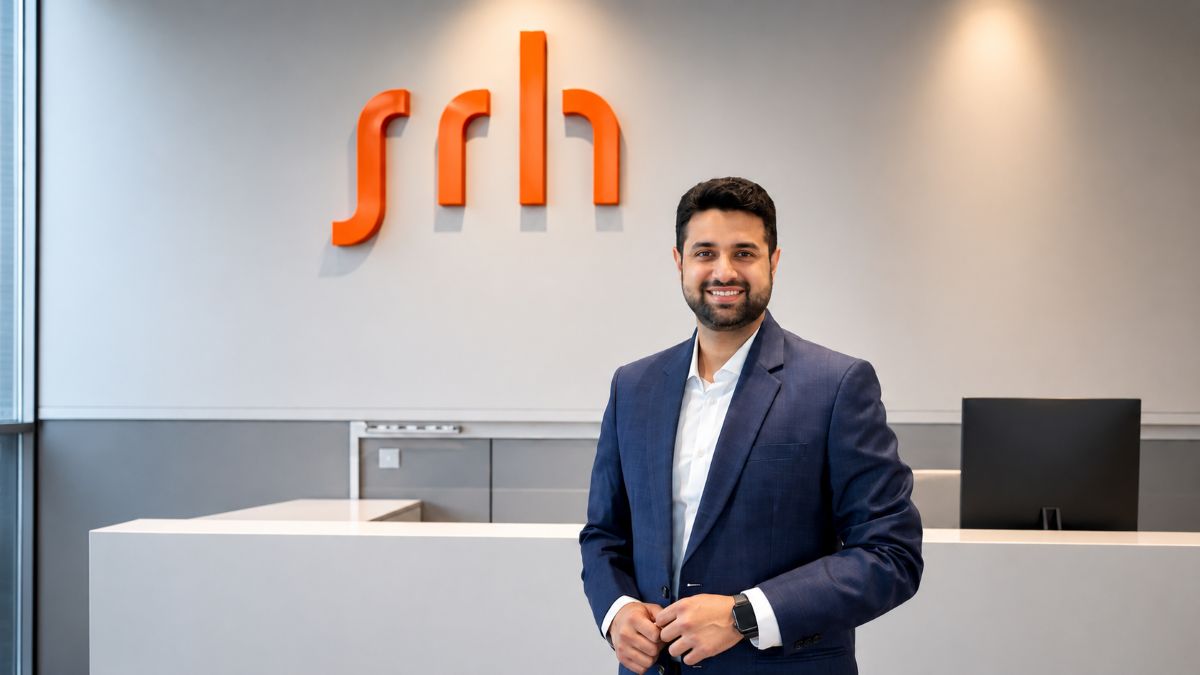
As Artificial Intelligence is rapidly transforming higher education, universities are under growing pressure to rethink how they prepare students with skills that extend beyond technical knowledge. In an interview with Enterprise Times, Ajith Mohan, Director for India, SRH University, discusses the university’s approach to embedding AI across teaching, learning, and institutional strategy, while emphasising critical thinking, ethics, creativity, and real-world application. He says, “Our focus is not on replacing human learning with technology, but on preparing students with the skills needed to thrive in workplaces where AI will increasingly become part of everyday professional practice.”
Enterprise Times: How is SRH University integrating AI into its long-term academic and institutional strategy?
Ajith Mohan: For SRH University, AI is viewed as a long-term transformation that is reshaping industries, influencing decision-making, and redefining the future of education itself. Our strategy focuses on integrating AI in a practical and application-oriented manner across both academics and institutional processes.
AI-related skills and competencies have been embedded into programmes across business, engineering, computer science, health sciences, and design. This ensures that students graduate prepared to work alongside AI in areas such as data-driven decision-making, automation, and the ethical application of emerging technologies. According to the World Economic Forum Future of Jobs Report 2025, 86% of employers expect AI and information processing technologies to transform their business by 2030. Reflecting a similar shift in India, the FICCI–EY AI Adoption Survey 2025 found that 57% of Indian higher education institutions already have AI policies, while 53% are using generative AI to develop learning materials, highlighting how universities are increasingly embedding AI into academic ecosystems.
At an institutional level, SRH follows its CORE approach, which emphasises project-based learning and continuous feedback, aligning naturally with AI-enabled and personalised learning environments. At the same time, our focus is not on replacing human learning with technology, but on preparing students with the skills needed to thrive in workplaces where AI will increasingly become part of everyday professional practice.
Enterprise Times: Do you see AI as a tool to enhance learning, or as something that will fundamentally reshape the education system itself?
Ajith Mohan: It is likely a combination of the two. For starters, it has already been proven that AI helps students learn better by making information more readily available, personalizing their learning paths, and allowing them to interact with difficult material more effectively. With appropriate application, it can create space for more discussion, innovation, and practical problem-solving.
However, over time, AI will certainly disrupt the higher education system. Historically, universities have been created on the basis of information shortage and scarcity, with institutions acting as the primary channels for disseminating knowledge. But AI transforms this dynamic entirely by making all information instantly accessible. Therefore, the role of higher education is no longer about imparting knowledge but rather making sense of it, applying it correctly, challenging it, and using it responsibly. According to the McKinsey Global Survey on AI 2024, 65% of organisations globally are now regularly using generative AI in at least one business function, reflecting how quickly AI is reshaping workplace expectations and professional environments. This shift is already visible in India as well, where Deloitte’s 2024 Asia Pacific survey found that 93% of Indian students and 83% of employees are actively engaging with generative AI technologies, reinforcing how rapidly AI is reshaping learning and workplace expectations.
It is, in fact, precisely why the SRH’s CORE approach continues to remain relevant in this age of AI. Our program inherently emphasizes competencies over mere knowledge acquisition, prioritizing collaboration, critical analysis, adaptability, communication skills, and practical application.
Enterprise Times: Are there challenges in aligning AI-driven education with existing academic frameworks?
Ajith Mohan: These challenges are significant because most university systems were designed before AI became part of everyday learning and professional life. These challenges are significant because most university systems were built before AI became part of everyday learning and work. One major concern is assessment, as AI can now generate high-quality responses within seconds, pushing universities to move beyond memorization-based exams toward practical application, presentations, teamwork, and problem-solving. According to the UNESCO Global Education Monitoring Report, fewer than 10% of schools and universities globally currently have formal frameworks for generative AI use in classrooms.
Academic integrity is another key challenge. Universities must help students use AI ethically and responsibly rather than simply restrict it. This also requires continued investment in faculty training, curriculum development, and digital infrastructure to keep education aligned with rapid technological change.
At the same time, preserving the human element in education remains essential. Universities play a critical role in developing critical thinking, collaboration, communication, resilience, and ethical judgment, qualities that will remain vital even in an AI-driven world.
Enterprise Times: What skills is SRH prioritizing to ensure students don’t become overly dependent on AI?
Ajith Mohan: At SRH University, we believe future ready graduates must know how to work with AI without becoming dependent on it. That is why we prioritise critical reasoning, helping students question outputs, identify bias, evaluate sources, and recognise inaccuracies. In an AI driven world, asking the right questions is becoming as important as finding answers.
We also place strong emphasis on creativity, communication, collaboration, and adaptability, all of which remain essential in technology driven workplaces. Through our CORE model, students engage in interdisciplinary and project based learning that encourages independent thinking, decision making, and problem solving in uncertain environments.
Ethical awareness is equally important. As AI increasingly influences sectors such as healthcare, business, finance, and media, students must understand the broader social and ethical impact of technology driven decisions. Ultimately, our goal is not simply to teach students how to use AI tools, but to develop graduates who can think independently, lead responsibly, and apply technology with discernment.
Enterprise Times: Are your courses helping students build portfolios or real-world experience that can directly translate into AI-related job opportunities?
Ajith Mohan: Yes, very intentionally. At SRH University, practical learning is a central part of the student experience rather than an addition to classroom education. Students work on real projects throughout their studies, helping them graduate with hands-on experience and a stronger understanding of professional environments.
Through the CORE model, learning extends beyond theory into industry linked assignments, interdisciplinary collaboration, case studies, and applied research. In programmes such as business, computer science, engineering, and data related fields, students are also exposed to AI supported tools, analytics platforms, automation systems, and digital business solutions that are shaping modern workplaces.
This approach helps students build both confidence and practical skills. Partnerships with organisations such as SAP, along with internships, live industry projects, and thesis collaborations, provide valuable exposure to real business challenges across sectors including healthcare, logistics, design, and management.
Enterprise Times: When designing a course, how much weight is given to future job relevance versus academic fundamentals?
Ajith Mohan: At SRH University, we do not see academic fundamentals and future job relevance as competing priorities. Strong academic foundations in critical thinking, research, ethics, and domain knowledge remain essential for long term adaptability, even as industries and technologies continue to evolve.
At the same time, universities must respond to changing workforce demands. This is why SRH emphasises applied learning, industry collaboration, and curriculum development aligned with current market needs. According to the World Economic Forum Future of Jobs Report 2025, 85% of employers plan to prioritise workforce upskilling, while analytical thinking remains the most sought after core skill globally. This shift is strongly reflected in India as well, where Mercer’s India Graduate Skill Index 2025 found that only 42.6% of Indian graduates are considered employable overall, while just 46.1% are job-ready for AI and ML roles, highlighting the growing need for universities to balance academic fundamentals with practical, industry-aligned skills.
Through the CORE model, students combine theoretical learning with practical application through projects, teamwork, presentations, and case based learning. The goal is to prepare graduates not just for their first job, but for long term professional adaptability in a rapidly changing world.