At the recently held CES electronics show, NVIDIA unveiled the “Alpamayo” family: a collection of open-source AI models and tools designed to teach self-driving vehicles (AVs) to think like humans. The goal is to increase safety by equipping cars with logical reasoning capabilities, especially in complex and unpredictable traffic situations.
Until now, the so-called “long tail”—rare and unexpected scenarios on the road—has been the toughest challenges for autonomous systems to safely master. Traditional AV architectures separate perception and planning, which can limit scalability when new or unusual situations arise, making them less flexible in new situations. With Alpamayo, NVIDIA introduces a system that not only acts but also “explains” why it makes a particular decision.
“The ChatGPT moment for physical AI is here — when machines begin to understand, reason and act in the real world,” said Jensen Huang, founder and CEO of NVIDIA. “Alpamayo brings reasoning to autonomous vehicles, allowing them to think through rare scenarios, drive safely in complex environments, and explain their driving decisions.”
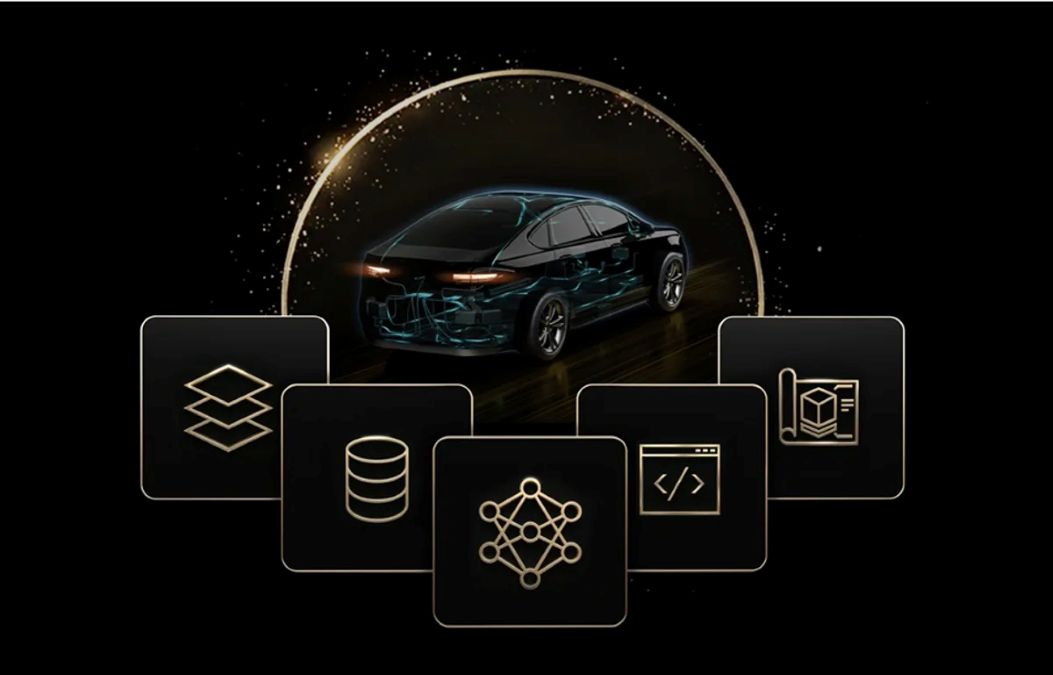
The Alpamayo family rests on three pillars:
- Alpamayo 1: The first open-source model using chain-of-thought reasoning. The model analyzes video input and generates not only a driving trajectory but also the logic behind each decision.
- AlpaSim: A fully open‑source, end-to-end simulation framework for high‑fidelity AV development, available on GitHub. It provides realistic sensor modeling, configurable traffic dynamics and scalable closed‑loop testing environments, enabling rapid validation and policy refinement.
- Physical AI Open Datasets: A massive database of over 1,700 hours of driving data from diverse regions and conditions, covering rare and complex real-world edge cases essential for advancing reasoning architectures. These datasets are available on Hugging Face.
Broad support from the industry
Mobility leaders such as Jaguar Land Rover (JLR), Lucid Motors, and Uber, have expressed their support for Alpamayo. For Uber, the technology offers opportunities to roll out Level 4 autonomy (fully self-driving in specific areas) more quickly and safely.
“Open, transparent AI development is essential to advancing autonomous mobility responsibly,” said Thomas Müller, executive director of product engineering at JLR. “By open-sourcing models like Alpamayo, NVIDIA is helping to accelerate innovation across the autonomous driving ecosystem, giving developers and researchers new tools to tackle complex real-world scenarios safely.”