
Global Capability Centers (GCCs) are global hubs that multinational corporations (MNCs) establish to access talent, resources, and expertise outside their home market. They offer a range of services, such as research and development, IT, business processes, and engineering, and are a strategic extension of a company’s operations. GCCs have evolved from cost-saving centers to key strategic pillars for companies, driving innovation, efficiency, and growth.
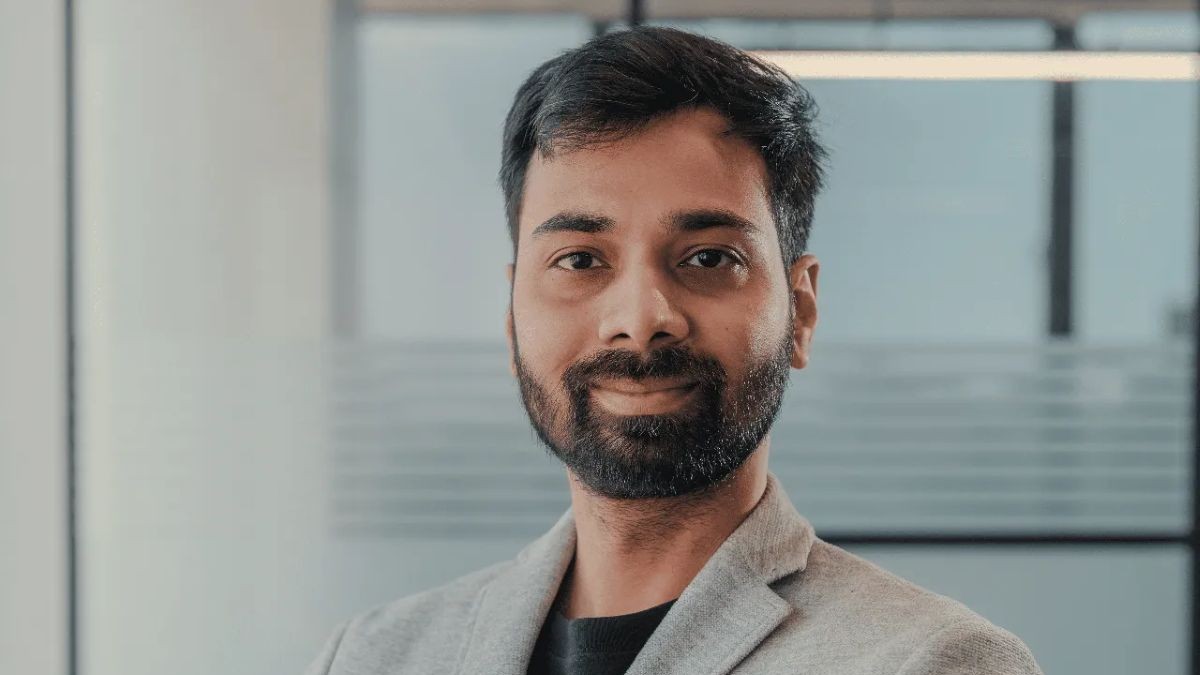
As the global GCC market is gaining momentum and the GCC sector in India alone is expected to surpass $100 billion by 2030, according to Nasscom- Zinnov report, Enterprise Times spoke to Piyush Kedia, Co-Founder and CEO of InCommon, who explains how InCommon is leveraging AI and emerging technologies to make India based GCCs innovation hubs rather than traditional cost or delivery centers.
Enterprise Times: How is InCommon leveraging AI and emerging technologies to make India based GCCs more than just cost-centres, in other words, how are they becoming innovation hubs?
Piyush Kedia: InCommon’s approach to AI is grounded in capability-building, not inflated tech promises. We focus on helping clients build AI-first teams and AI-proficient talent from day one.
We run AI-focused hackathons, help clients shape early AI problem statements, and place engineers and leaders with hands-on experience in generative AI, MLOps, automation, and modern data platforms.
Our advisor network includes practitioners who have built AI products at scale, and they guide clients on integrating AI across product, engineering, data, and internal operations.
This combination of AI-native talent, expert advisory, and structured experimentation allows India-based GCCs to evolve into true innovation hubs rather than traditional cost or delivery centers.
Enterprise Times: Which geographies (Tier-1 vs Tier-2 Indian cities) are showing greater traction for tech/AI-GCC setups in 2024-25, and what infrastructure or talent shifts are enabling this trend?
Piyush Kedia: Tier-1 hubs like Bengaluru, Hyderabad, and Pune continue to lead AI and platform engineering growth because of their ecosystem density, mature GCC presence, and ready access to senior leadership talent.
At the same time, select tier-2 cities are seeing strong momentum. They offer high-quality talent, lower attrition, and more attractive operating costs, making them especially compelling for mid-market and PE-backed companies looking to scale efficiently.
Improved connectivity, remote-friendly workflows, and a more evolved startup and GCC culture have also made hybrid models viable: leadership anchored in tier-1, larger delivery and engineering teams in tier-2.
Our work across these markets shows that the most successful companies evaluate locations through a structured lens: depth of talent, leadership availability, infrastructure readiness, competitive intensity, and long-term employer brand positioning. InCommon guides clients through this assessment so their GCC footprint aligns with both immediate needs and future growth.
Enterprise Times: With the rise of AI/ML, how are GCCs transforming their talent models (reskilling, hybrid & remote models, specialist vs generalist roles) and how is InCommon helping clients adapt this?
Piyush Kedia : With the rise of AI and ML, GCCs are overhauling their talent models in significant ways. They are moving away from narrow specialist silos toward blended, cross-functional teams: engineers who are fluent in AI tooling, data professionals embedded within product squads, and product managers who can understand and evaluate ML trade-offs. Continuous reskilling has become a central priority, with engineers learning to use AI assistants, QA teams shifting toward automation and tooling, and analysts evolving into product analytics and experimentation roles. Hybrid and remote work models are now standard, often with core leadership based in one location while contributors operate from multiple cities.
InCommon helps clients design these evolving talent models from the outset by defining where specialist expertise is essential, where generalists can excel, and what learning and development infrastructure is required to support both. Our advisor and partner networks further enable ongoing upskilling and knowledge sharing so GCCs stay aligned with rapid AI and ML advancements rather than trailing behind their global headquarters.
Enterprise Times: What are the biggest technology or operational bottlenecks companies face when shifting a GCC to be “future-ready” (AI, cloud native, analytics driven) and how is InCommon addressing them?
Piyush Kedia: Companies shifting their GCCs to become truly future-ready, AI-enabled, cloud-native, and analytics-driven, often face a few persistent bottlenecks. Legacy architectures and fragmented toolchains slow down modernisation efforts, making it difficult for teams to operate in an AI-first manner when the underlying systems are not prepared. A lack of clear ownership and decision rights in India further limits the ability of local teams to drive transformational change, reducing them to implementers instead of architects. Many organisations also underestimate the depth of platform and DevOps investment required to scale AI and analytics, causing initiatives to stall or remain stuck in proof-of-concept mode. On the operational side, governance, security and compliance frameworks often lag behind the speed of new technology adoption. InCommon helps solve these challenges by designing the right mix of platform, data and application teams, establishing strong governance structures, and ensuring India leadership has the mandate and clarity needed to shape a truly future-ready GCC roadmap.
Enterprise Times: What technology trends do you expect GCCs in India to adopt more aggressively (for example, AI-first culture, industry vertical use-cases, edge computing, cyber resilience) in 2026?
Piyush Kedia: By 2026, we expect GCCs in India to adopt several technology trends far more aggressively. The first is an AI-first culture, where every function, engineering, support, finance, and operations, uses AI tools to increase leverage, speed, and decision quality. We also foresee deeper, verticalised AI and analytics use-cases in fintech, media, healthcare, logistics, and climate-tech, with India GCCs increasingly owning domain-specific solutions end to end.
Cyber resilience will become a core priority, with secure-by-design architectures gaining importance as more critical workloads and sensitive customer data are handled out of India. At the same time, edge computing and real-time data processing will see wider adoption in industries where latency, local processing, and distributed systems matter.
Overall, the GCCs that lean into these trends early, supported by the right leadership and platform investments, will become strategic centers of gravity within their global organisations.
Enterprise Times: Globally and in India, how is the strategic role of GCCs changing in the larger enterprise technology ecosystem — from support/back-office to R&D/innovation and how is InCommon positioning itself for that shift?
Piyush Kedia: Globally and in India, GCCs are shifting from cost and capacity centers to true extensions of the enterprise. They are increasingly owning product lines, data platforms, AI initiatives, and core engineering work. India teams are no longer operating as parallel units but as integrated counterparts to HQ, driving innovation rather than simply supporting it.
InCommon is designed for exactly this shift. We build GCCs with leadership first, outcomes first, and product ownership embedded into their structure. We help companies hire senior operators, stand up AI- and data-capable pods, and implement governance models that allow India teams to innovate with autonomy instead of functioning as execution-only hubs.
As the strategic role of GCCs moves deeper into R&D, platform engineering, and AI-driven innovation, our playbook, leadership access, outcome-led org design, and teams built for long-term ownership, positions us to help companies build hubs that truly advance their global technology agenda.
Enterprise Times: Finally, how will InCommon’s own roadmap (partnerships, investment, capabilities) evolve in the next 12-18 months to support technology-/AI-driven GCC growth for its clients?
Piyush Kedia : In the next 12–18 months, we’re deepening partnerships across assessment, AI-enabled sourcing, and learning platforms to give both clients and candidates a richer, more data-driven experience. We’re also investing in our own intelligence layer, city, talent, and compensation insights, so GCC design decisions become faster, sharper, and more precise.
Our advisor and leadership networks will expand across new domains and geographies, allowing clients to tap into practitioners who have actually built and scaled in those spaces. We will continue refining our playbooks for AI-first and platform-centric GCCs, enabling companies to move from “idea” to “fully operational hub” in a predictable and de-risked manner.
At the core, our roadmap is focused on one thing: helping companies build India teams that are truly strategic, capable of owning technology, AI, and innovation rather than simply adding incremental capacity.

