
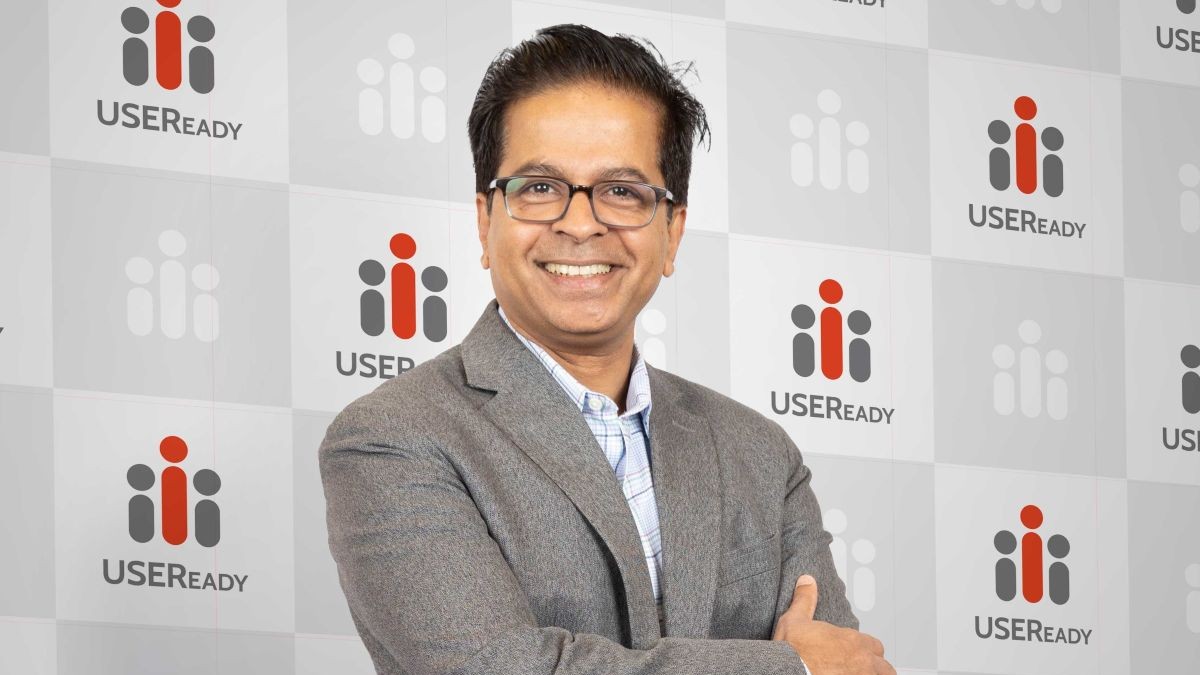
USEReady’s Uday Hegde on what agents do well, where humans still matter, and why proving beats trusting
Legacy BI migration has traditionally been slow, manual work, since years of accumulated reports, business logic and dependencies must be untangled before anything can move. Can AI agents fundamentally change that?
We put the question to Uday Hegde, Co-founder and CEO of USEReady. Yes, he says, agents can take over much of the heavy lifting, from discovery to conversion. But the hard part of migration was never the code, and humans stay firmly in the loop.
Prove It, Don’t Just “Trust Me”
Hegde says USEReady treats agentic migration as a “prove it” exercise rather than a “trust me” one. Every converted report, dashboard, metric and transformation should be traceable to its legacy source, while agents compare source and target outputs across historical datasets and edge cases.
KPI calculations, filters, joins and aggregation rules are then checked against the enterprise semantic layer, and critical reports and executive dashboards go to business experts for review before they reach production.
Beyond the code itself, metrics and business definitions must mean the same thing after migration as they did before. “The goal is not simply to migrate code but to preserve business meaning,” he says.
In his view, confidence comes from traceability, measurable accuracy scores, reproducible test results and business-user signoff. That combination, he adds, often delivers a higher degree of confidence than traditional manual migrations, where much of the logic review is never documented.
Where Agents Help, and Where They Don’t
Agents deliver the greatest benefit in the discovery, analysis and conversion phases. They can inventory thousands of reports, reverse-engineer SQL and transformation logic, map dependencies, classify assets by complexity, generate conversion code, and produce documentation, test cases and validation scripts.
Humans still add the most value in business-rule interpretation, stakeholder alignment, prioritization, change management, executive reporting requirements and exception handling. “In our experience, technology migrations are rarely limited by coding effort.” Hegde says. “They are limited by understanding business intent.” Put simply, agents can automate the mechanics of migration, but humans still own the business outcomes.
The Tribal Knowledge Problem
What trips up an agent, Hegde says, is not technical complexity but what he calls tribal knowledge: KPI calculations modified years ago without documentation, hardcoded exceptions for specific customers, products or regions, spreadsheet adjustments made outside official workflows, and business rules known only to long-tenured employees.
He offers an example. A formula may calculate correctly, yet a business unit may be excluding certain records every quarter because of a historical policy that was never formally documented. “An autonomous agent can infer patterns, but it cannot reliably infer organizational intent where no evidence exists.” He recommends combining agentic discovery with structured business validation workshops early in the migration.
From Builders to Governors
Once agents take over the execution pipeline, the role of the enterprise data team shifts from building to governing. Teams must set the guardrails, including migration standards, security requirements and approval workflows, while also owning the business glossary and certified metrics, reviewing exceptions and escalations, and maintaining an audit trail of lineage, decision logs and testing evidence.
The future operating model, as Hegde sees it, is not one of agents replacing teams but of teams supervising increasingly autonomous systems while remaining accountable for trust, governance and outcomes.
Lessons from Agentic Migration Projects
Several lessons keep recurring across agent-assisted projects, according to Hegde. The first is that discovery matters more than conversion, since most migration risk is created before any code is converted; organizations tend to underestimate report sprawl, duplicate content, obsolete dashboards and shadow reporting. The second is that semantic alignment matters more than syntax translation. Converting SQL is relatively straightforward, whereas ensuring a KPI means exactly the same thing after migration is significantly harder and delivers far greater business value.
Not everything needs to be migrated, either. Agentic discovery often reveals that 30-50% of reporting assets are rarely used or redundant, and as Hegde puts it, “migration becomes modernization when enterprises rationalize before they replicate.”
Trust, too, has to be engineered. Transparency, explainability, lineage, testing and reconciliation reporting all help, and users adopt agent-generated assets faster when they understand how decisions were made.
Will Manual Coding Disappear?
No, says Hegde. Agentic migration will dramatically reduce manual coding, but it will not eliminate the need for human expertise. Over the next several years, he expects 70-90% of conversion activities to become highly automated, with agents performing most repetitive code generation and testing and documentation being substantially automated as well.
Humans will still be needed for new business requirements, complex platform redesigns, ambiguous legacy logic, performance optimization, regulatory controls and exception management, and the engineer’s role will evolve from coder to orchestrator. Hegde describes this as “human-guided, agent-executed migration”, in which AI handles scale and speed while experienced data professionals ensure trust, governance and business accuracy.