
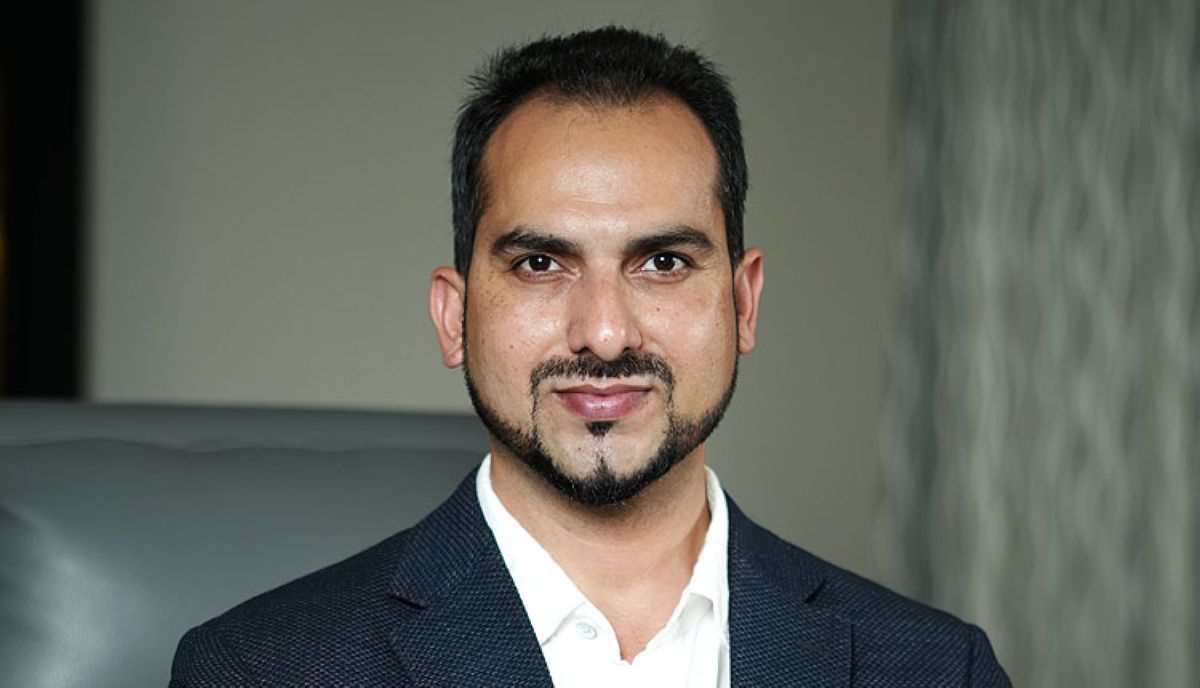
By Vishal Sirohi, CEO and CO-Founder, Island Computing
Enterprise AI has moved from feature to autonomous actor. The question that decides the next decade of production AI is who owns the operating boundary between humans and the agents acting on their behalf. That boundary is an infrastructure boundary, and it is where the CIO’s mandate has quietly changed shape.
The dominant enterprise AI workload in 2026 is long-running, stateful, tool-calling agentic execution. Through 2024, the interface was a chat window on top of an application. Today, agents read from production databases, call third-party APIs, initiate deployments, and act in sessions that outlast the human user’s login. That shift changes what secure collaboration between humans and AI means at the architectural level. The safety controls built for humans and services do not translate to autonomous agents. Retrofitting will not close the gap. The stack has to be purpose-built.
The scale of the problem is visible in the failure data. Gartner forecasts more than 40% of agentic AI projects will be cancelled by the end of 2027 over rising costs and governance gaps. Gartner also predicts 60% of AI projects will be abandoned through 2026 because the underlying data is not AI-ready. RAND research puts the enterprise AI failure rate at 80%. The MIT GenAI Divide report finds only 5% of AI pilots produce measurable P&L impact. Global AI spending is projected by Gartner at US$2.5 trillion in 2026. The gap between that spend and measurable enterprise return is an infrastructure and governance problem.
Five architectural properties have to change when infrastructure is designed for secure human-AI collaboration at production scale.
Identity for autonomous agents. Existing IAM frameworks were built for two principal types: humans and services. Agents are neither. They act on behalf of humans with delegated authority, across multiple systems, in sessions that outlast the human’s login. The cloud control plane has to issue scoped, time-bound credentials to agents and manage the lifecycle automatically. Human-designed access review cannot supervise a session that has already ended.
Structured audit at the storage layer. Agents read, write, and act on data without supervision. The platform must record what was read, what was written, by which agent, with traces that can be reconstructed during an incident. Application-level logging that an agent can bypass cannot serve as the safety record.
Observability designed for agent execution. A model-serving log is a request log. An agent trace is a tree of model calls, tool invocations, memory reads, retries, and human-in-the-loop checkpoints. Observability must be designed for the tree.
Hard budgets and circuit breakers at admission time. A single misconfigured agent loop can consume ten times its expected budget in tokens, tool calls, and compute. The platform has to enforce hard budgets and circuit breakers before a workload can run away. Cost dashboards that surface overruns after the invoice has landed are not a control.
Change control that assumes agent-initiated deployments. When an agent proposes a production change, the safety boundary moves from human approval to policy enforcement at the platform layer. Deployment systems become the safety boundary for agent-initiated change, with the default posture moving from human-approved to policy-enforced.
The CIO role has evolved in step with these architectural shifts. The mandate is now to make the human-AI operating boundary safe by design across compute, data, and intelligence as three portfolio assets. The FinOps Foundation’s State of FinOps 2026 finds 98% of FinOps teams now manage AI spend, up from 31% two years ago, though only 22% produce per-workload unit economics monthly. Kyndryl’s 2025 Readiness Report finds 61% of senior business leaders feel more pressure to prove AI ROI than a year ago. Financial-safety mechanisms and operations-safety mechanisms are the CIO’s balance-sheet controls for the next decade.
For Indian enterprises, sovereignty adds a jurisdictional layer to the safety architecture. The DPDP Act, RBI localisation circulars, SEBI cloud advisories, and CERT-In’s six-hour incident-reporting directive constrain where the data supporting agent actions can sit. The MeitY addendum of 20 March 2026 classifies government workloads into four categories. Top Secret and Secret cannot be hosted on any cloud. Category A and Category B can only run on MeitY-empanelled cloud service providers under a defined procurement framework through NIC, State Data Centres, PSUs, or the empanelled CSP list. The operator identity, the jurisdiction under which the audit chain sits, and the law that governs the disclosure of agent-produced records matter to the Union government. Private-sector regulators will follow.
Secure human-AI collaboration is an infrastructure and governance problem. The CIO who owns the substrate under the collaboration owns the safety of the next decade of enterprise AI. Enterprises that install identity, audit, observability, cost, and change-control mechanisms today set the operating baseline for the production AI of 2030. The rest will retrofit under audit pressure.
The scoreboard for India is broader still. AI infrastructure will be a multi-hundred-billion-dollar market over the next decade. Whether that spend compounds into Indian jobs, Indian engineering capability, and Indian technology exports, or funds foreign employment and R&D with Indian capital, will be decided by the same CIOs making the human-AI collaboration decision today. The infrastructure decision is where the sovereignty decision compounds.