AI Appreciation Day 2026: Here’s what industry experts have to say:
Ranga Jagannath, Senior Director – Growth, Agora

“Artificial intelligence is reaching a point where people will judge it less by how powerful it is and more by how natural it feels to use. The real shift we are seeing is from AI that simply generates outputs to AI that can hold conversations, understand context and respond in real time. As AI becomes more embedded in everyday experiences, the focus will move from technology itself to the quality of the interaction it enables.
This is creating opportunities for businesses to engage customers, employees and communities in entirely new ways. But great AI experiences are not built on intelligence alone. They depend on responsiveness, trust and the ability to communicate naturally.
At Agora, we believe the next wave of innovation will come from AI that feels less like a tool and more like a collaborator that helps people access information, solve problems and connect with others in ways that are seamless, intuitive and genuinely useful. This AI Appreciation Day, it is worth recognising how far artificial intelligence has come in changing the way people interact with technology.”
Pratap Mane, President & Country Head – India, Colt Data Centre Services (Colt DCS)
“Artificial Intelligence (AI) is rapidly transforming how organisations operate. It is reshaping investment priorities, redefining digital infrastructure and influencing the future competitiveness of industries ranging from manufacturing and healthcare to financial services and logistics. As AI moves from pilots to production, the conversation is shifting from what AI can do to whether the underlying infrastructure is ready to support it at scale.
The next chapter of AI will depend as much on resilient power, scalable compute, high-performance connectivity and sustainable infrastructure as it does on advances in models and applications. Organisations that invest in robust, future-ready digital infrastructure today will be better positioned to accelerate innovation, adapt to changing business needs and scale AI with confidence. At Colt Data Centre Services (Colt DCS), we see this evolution as an opportunity to innovate continuously by developing AI-ready data centres that deliver the performance, sustainability and operational excellence required for the next generation of AI workloads.
AI Appreciation Day is an opportunity to recognise that every advance in AI depends on the infrastructure that powers it, providing the compute, connectivity, resilience and sustainability needed to support AI at scale. The organisations that will achieve the greatest long-term advantage will be those that invest not only in smarter AI, but in the resilient, scalable foundations required to support its continued growth.”
Bhavyan Mehta, Vice President – Engineering, Commvault

AI Appreciation Day arrives at a defining moment for India and the world. Artificial intelligence has moved from being a competitive advantage to becoming the infrastructure of modern enterprise. Cloud changed where applications lived, mobile changed where work happened, and AI is now accelerating the pace at which business, public services and innovation move.
India’s digital public infrastructure has shown that scale must be built on trust, inclusion and resilience. AI now demands the same discipline. Recent demonstrations such as Anthropic’s Mythos show how the window between vulnerability discovery and exploitation can shrink from weeks to minutes, changing the economics of existing cyber risk.
Responsible AI must therefore be transparent, accountable, secure and supported by data, identities and systems that organizations can trust and recover. The next chapter of work will be defined by purposeful collaboration between humans and AI agents. People will bring judgement, empathy, context and accountability, while machines research, reason, automate and act at speed.
Leaders who create resilient ecosystems for this partnership will turn AI from a productivity layer into a trusted engine for growth. In an agentic enterprise, intelligence will create momentum, and resilience will earn trust.
Sachin Panicker, Chief AI Officer, Fulcrum Digital

“Most enterprises are no longer asking whether AI works. They’ve seen it work in a pilot. The harder question, and the one that actually determines value, is whether it works reliably across a live business process, month after month, with the same data mess, the same edge cases, and the same regulatory scrutiny that every other system in the enterprise has to survive. That’s a far higher bar than a proof of concept clearing a demo.
Three things separate organisations that get past the pilot stage from those stuck there.
– First, data readiness. AI is only as trustworthy as the data feeding it, and most enterprises underestimate how much foundational work—cleaning, structuring, and governing that data—has to happen before a model can be trusted with a real decision.
– Second, governance that is built in from day one rather than retrofitted after something goes wrong. Governance shouldn’t be the function that slows AI down. Done well, it’s what gives leadership the confidence to deploy at scale, because they know where humans stay in the loop, how decisions are audited, and what happens when the system makes a mistake.
– Third, and this is the mindset shift that matters most, AI has to be treated as a business enabler with an owner and a P&L outcome, not a technology initiative owned by IT in isolation. The enterprises seeing real transformation are the ones where business leaders, not just technologists, are accountable for AI outcomes.
On AI Appreciation Day, the most useful thing we can appreciate about AI isn’t the technology itself. It’s the discipline it’s forcing on enterprises to finally fix the data and governance foundations they should have fixed years ago.”
Subhash Kalluri, Founder, FreJun
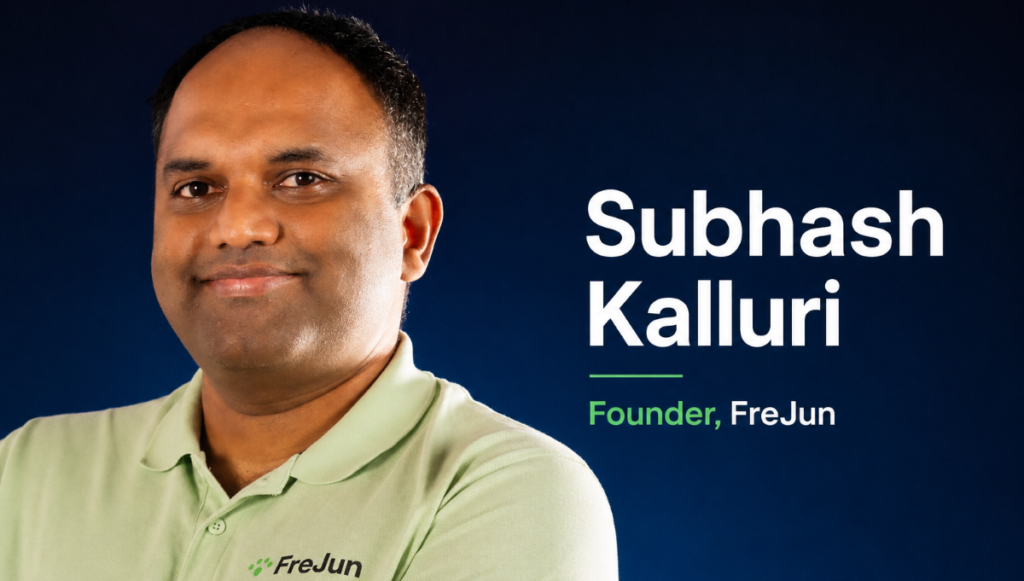
“Voice AI now sits inside some of the most sensitive conversations a business has: a candidate discussing a job change, a patient booking a medical appointment, and a customer disputing a loan repayment. As adoption accelerates, it is worth pausing on what is actually being automated. It is not just a task; it is a moment of trust between a person and an institution, and AI is now a participant in that exchange.
An AI agent that qualifies a lead or screens a candidate is making judgements that affect real outcomes for real people, and that responsibility cannot be an afterthought bolted onto a model. It has to be built into the infrastructure itself: how data is stored, how consent is handled, how calls are recorded and audited, and how a system behaves when it does not know the answer.
For FreJun, this has meant treating compliance and data governance as a design principle rather than a checklist. The goal was never automation for its own sake. It is to give people, recruiters, support agents, and sales teams more time for the parts of their work that genuinely need human judgement by handling the repetitive parts responsibly and transparently. A human-first future is not one where AI does less. It is one where AI is trusted enough to do more, because it was built with people’s interests at the centre from the start.”
Hariprasad PS, Head of AI, HyperVerge

“AI Appreciation Day asks a harder question than most calendar observances. While the world is focused on how AI improves productivity, is it really bias-free? Every day, AI systems decide in milliseconds whether a face matches an ID, whether a document is genuine, or whether a person gets to open a bank account or receive a loan. AI is making decisions that touch people who look nothing alike. A model that performs well in a lab won’t automatically perform well in a village in India or on a busy street in Vietnam. Lighting varies, paper stock varies, camera quality varies, and network speed varies. No one sets out to build a biased system. But any AI company that ignores this reality ends up being one.
The pattern is well documented across the industry: when training data doesn’t reflect the full diversity of faces, documents, and conditions a system will encounter in the real world, accuracy tends to be uneven, and some legitimate users get rejected more often than others. Closing that gap takes deliberate work. It means sourcing training data that spans demographics, document formats, and markets, and then auditing outcomes across those segments rather than trusting a single aggregate accuracy score.
Device and bandwidth constraints deserve equal attention. A verification flow built for flagship phones and fast broadband excludes huge segments of users in emerging markets. Single-image checks that avoid heavy video processing, and models that run reliably on low-end devices and patchy connections matter as much to fairness as the underlying face-matching algorithm does.
This AI Appreciation Day, it’s worth celebrating what AI makes possible while being honest about what it demands. Bias-free AI is an ongoing discipline of testing across geography, document type, age, and network condition, because the moment that testing stops, the system starts failing someone worthy.”
Vishal Sirohi, CEO & Co-Founder, Island Computing
The most significant shift is from experimentation to discipline. Through 2024, enterprises measured AI success by the number of pilots launched. In 2026, MIT research shows only 5% of AI pilots produce measurable P&L impact, and RAND puts the enterprise AI failure rate at 80%. Enterprises are now treating compute, data, and intelligence as three portfolio assets that require unit economics per workload, bounded budgets, sovereign control planes for regulated data, and audit surfaces designed for autonomous agents. The FinOps Foundation’s State of FinOps 2026 finds 98% of FinOps teams now manage AI spend, up from 31% two years ago, though only 22% produce per-workload unit economics monthly. Alongside the discipline shift, the dominant AI workload itself is moving from short, stateless model inference to long-running, stateful, tool-calling agentic execution, and the infrastructure built for one does not run the other at production scale. The shift underneath is from AI-as-feature to AI-as-asset. The enterprises that install the safety and cost mechanisms today set the operating baseline for the next decade of production AI.
Praveer Kochhar, CPO & Co-founder, KOGO AI

AI Appreciation Day must celebrate what private AI delivers, not just what public AI demonstrates. The rollercoaster of AI innovations has demonstrated that when it gets down to brass tacks, businesses need AI platforms that run real operations without exposing proprietary data to third party vendors. Private AI changes this equation, which deserves appreciation. When AI is private, it lets a company keep its models, data, and institutional knowledge inside its own infrastructure while agents execute actual work.
This shift is already visible across the industry. Enterprises now deploy agentic systems that read contracts, generate dashboards, and manage cross-team workflows inside infrastructure they control. Analyst work that once took days now finishes in minutes. And all of this can be done privately, which Indian startups have clearly demonstrated.
The industry has to recognize what that shift means. Public AI proved that large models can reason and generate. Private AI proves that enterprises can trust AI enough to hand it real authority over real processes. That trust depends on control over which models run, how data moves, and the audit trail behind every decision an agent makes.
This AI Appreciation Day, it’s important to celebrate the engineers who build guardrails, the governance layers that let a CFO sleep at night while agents touch financial systems, and the shift from AI as a feature to AI as infrastructure that enterprises actually own.
That’s what deserves recognition this year—AI that works for the enterprise, inside the enterprise, on the enterprise’s own terms.
Vimal Nair, Chief Growth Officer, Krisp

“Artificial intelligence has rapidly evolved from a breakthrough technology to core enterprise infrastructure, reshaping how businesses communicate, collaborate, and operate. On World AI Appreciation Day, it’s worth recognizing that AI’s biggest impact is no longer in standalone applications, but in technologies that integrate naturally into everyday work. Voice AI is one of the clearest examples of this shift. As hybrid work, global customer support, and distributed teams make real-time communication a business imperative, voice AI has evolved from a nice-to-have to an essential part of enterprise operations.
At Krisp, we’re seeing this firsthand. Our AI processes over a billion minutes of voice conversations every month-removing background noise for clearer calls, capturing meeting notes without interrupting conversations, and enabling real-time accent conversion so global support teams can communicate more effectively across markets. As enterprises move from experimenting with AI to relying on it for everyday operations, the next phase will be defined by AI that enhances communication, strengthens security, and integrates seamlessly into the workflows teams already use.”
Hariharashudhan V K, Chief Operating Officer, Neokred Technologies
“AI Appreciation Day must prompt Indian fintech to reckon with digital financial fraud. This alone has cost Indian consumers and institutions roughly ₹1.25 lakh crore over the past three years. Fraud moves at machine speed now and only AI matches that speed on defense. That reality must shape how the industry talks about AI.
AI can certainly write great marketing copy but fintech businesses need AI that reads a transaction in milliseconds and decides whether it’s real. Identity verification, KYC onboarding, and fraud monitoring depend on models that process signals like fingerprints, behavioural patterns, transaction velocity and network anomalies because a human analyst would take longer to catch these inconsistencies. When these systems work, they stop fraud before it settles.
It’s important to celebrate AI that prevents fraud and protects privacy. Consent management, data minimization and audit trails matter just as much as businesses are bound by the DPDP Act and other data protection frameworks. AI that respects a user’s consent choices while still delivering real-time risk decisions represents the harder engineering problem and it deserves more attention.
This AI Appreciation Day, the fintech industry should the teams building infrastructure that regulators trust, banks rely on, and users never notice because it simply works. That invisibility is the real achievement because it is fast, private and built for the moment it matters.”
Vishal Rajani, CEO, Synergos

AI earned its place in marketing the hard way, by taking over the parts of the job nobody really enjoyed. Five years ago, a junior strategist spent two days pulling competitor data before a pitch even began. Today, that groundwork takes an afternoon, and the strategist spends the rest of the week on things that the human mind is exceptional at doing—reading a client’s real problem underneath the brief, asking the right questions and solving the right problems.
That shift is worth acknowledging today. AI is clearing the runway for marketers to exercise better judgement. Media buyers who used to babysit spreadsheets now spend time asking why a campaign underperformed, how to make it better and all sorts of right questions. Copywriters who burn a whole day on ten headline variants generate fifty in an hour and spend their energy on the one line that actually says something meaningful.
Some marketers are getting it wrong by treating AI as a shortcut to skip thinking altogether. The ones getting it right are treating AI as a way to do more thinking faster on questions that actually decide outcomes. Before AI became mainstream, a lot of people in the industry spent time honing skills needed for menial tasks. AI is pushing people to excel at exercising judgement because a tool that drafts a report is only useful if someone still asks whether the report says anything true.
Over two decades of being a marketer, I’ve learned that the scarce resource was always attention, the kind that notices when a strategy is technically correct but for the wrong client. AI has bought us more time to think strategically. To everyone building tools that free people up to do their best thinking, on this AI Appreciation Day, I’d like to say thank you.
Rajnish Gupta, MD & Country Manager, Tenable India

“AI Appreciation Day shouldn’t just be a celebration of productivity, it needs to be a reality check for how we manage risk.
The defining feature of this era is the sheer velocity of AI adoption, and India sits at the front of that curve. Recent industry data puts weekly generative AI usage among Indian employees at 92%—among the highest anywhere in the world. It’s created a corporate culture driven by instant gratification, where timelines that used to take days are collapsed into seconds. This is unlocking undeniable innovation, but convenience always wins until the consequences catch up.
Right now, speed has become the only priority. Anything that introduces a moment of friction, whether it’s governance, compliance, or essential security checks, is being viewed as an obstacle rather than a necessity.
Employees are eagerly feeding sensitive corporate data into unvetted large language models, and in India this shows up starkly. Shadow AI usage here runs as high as 58%, the highest of any market tracked. Under the DPDP Act, 2023, that represents a governance and compliance exposure, since unauthorised processing or disclosure of personal data can itself constitute a reportable breach. We’ve seen this exact movie before with rushed cloud migrations, only this time it’s happening faster and at a much greater scale. This isn’t an argument against AI; its benefits are real and irreversible. But we are building an exponential future on a fragile foundation.
The way forward is shoring up defences at the speed of adoption. That means enterprise-grade exposure management platforms with proper data controls and clear policy on what can and cannot be shared with public models, and training that treats AI security and literacy as seriously as data privacy. Boards and CXOs must stop treating governance and cybersecurity as a compliance checkbox and start treating it as a necessary part of infrastructure itself. The fastest to adopt won’t win as big as the ones that adopt it safely.”– Rajnish Gupta, MD & Country Manager, Tenable India.
Anand Sampath, EVP and Head of AI Innovation Centre, India, Visionet Systems

“This AI Appreciation Day, enterprises need to ask an uncomfortable question: are we getting smarter with AI, or simply getting faster?
Every prompt, correction, and workflow we feed into AI carries institutional knowledge, judgment, and context that form an enterprise’s competitive edge. The critical question is where that learning accumulates and who ultimately benefits from it. Speed alone is no longer enough. The leaders who maximize AI will be those who build a clear trust boundary around their proprietary knowledge, retain control of their learning loop, and keep human judgment in the calls that matter.
At Visionet, we believe enterprises should not invest in AI tools for the sake of adoption; they should invest in measurable AI outcomes, with architectures that compound their intelligence and competitive advantage within the business.
The winners in AI won’t be the fastest adopters. They’ll be the ones who keep their learning loop intact.”
Aaron Bugal, Field CISO, APJ, Sophos

While AI Appreciation Day is ‘celebration’ of the benefits of AI, it also serves as a timely reminder about the responsibility that comes with using it securely and safely.
There is no question that AI is changing cybersecurity. It helps defenders analyse threats faster and respond more efficiently, but also gives cybercriminals new ways to scale familiar attacks. The technology is evolving rapidly, yet the fundamentals of good cybersecurity remain remarkably consistent.
Even in an era of highly sophisticated technologies available to attackers, 79% of ransomware attacks in the APJ region still begin with identity-based techniques such as phishing, malicious emails and compromised credentials – according to the finding of the Sophos Ransomware Report released today. This shows that AI isn’t replacing the tactics attackers rely on but it is making them faster, more convincing and easier to execute at scale.
Therefore, there is an imminent need to solidify the foundations of a robust defence system against these attacks which not just focuses on speed and scale but is also sustainable in the long run. That comes with embedding governance, visibility and security into AI initiatives from the outset, rather than treating them as an afterthought.
AI is an incredibly powerful tool, but like any tool, its value depends on how it’s used. The organisations that will benefit most are those using AI to strengthen human expertise, accelerate response and build resilience, rather than assuming technology alone will solve their cybersecurity challenges.”
Rakesh Kumar, Infrastructure Solution Head, Vertiv

“On a day meant to celebrate AI’s progress, it’s worth remembering that none of it works without the infrastructure layer underneath. High-density computing puts real strain on power and cooling systems, and getting that right is what actually lets AI scale reliably. This layer determines whether AI adoption holds up outside a lab environment. That’s the foundation we build at Vertiv.”