
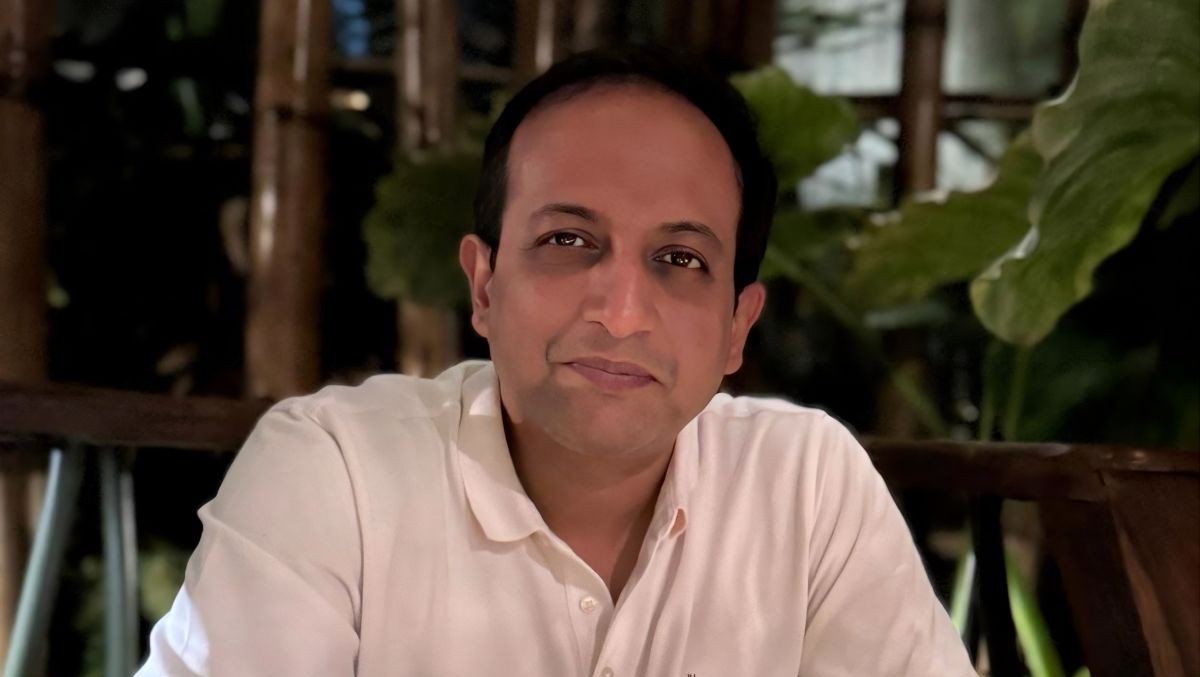
Shivprakash S. Mogali, Founder of Digitory, in an interaction with Enterprise Times, discusses how AI-driven automation and data intelligence are transforming restaurant operations, helping F&B businesses improve efficiency, profitability, and customer experience at scale.
Enterprise Times: The restaurant space is moving from individual POS solutions to an integrated operation platform. What factors are triggering this change, and how are restaurant players responding to it?
Shivprakash S Mogali: Individual POS solutions were, at their core, just billing systems. That was enough once upon a time. But the restaurant business has changed. Today, inventory, central kitchen, central stores, table reservations, digital menu ordering, POS, CRM & loyalty, feedback, menu engineering, and social media all need to talk to each other. These aren’t separate functions anymore, they’re deeply interdependent. Running them in silos means you’re leaving both money and efficiency on the table. Restaurants that have figured this out are moving to integrated platforms because the alternative of managing disconnected tools that don’t speak to each other simply doesn’t work at scale.
Enterprise Times: In light of soaring food prices and pressure on operations, how are technology and real-time analytics supporting better profits and efficiencies within restaurants?
Shivprakash S Mogali: Food price increases used to be relatively predictable, mostly inflation-driven, gradual, and manageable. That’s no longer the case. Geo-political events, supply chain disruptions, and post-COVID volatility have made food costs unpredictable in a way operators weren’t prepared for. On the staffing side, the number of outlets has grown significantly, but talent hasn’t kept pace. Attrition in hospitality is among the highest across industries.
Food and staff together make up the bulk of a restaurant’s cost structure and when both of these become dynamic and hard to control, traditional methods simply can’t keep up. What’s needed is a system that surfaces cost changes in real time, flags high and low selling menu items, and builds in enough process structure to keep operations stable even as staff turns over. Technology is what makes that possible.
Enterprise Times: Why is vertical SaaS gaining traction in hospitality today, and how is it helping solve problems that general-purpose enterprise applications struggle to tackle?
Shivprakash S Mogali: Hospitality is a niche industry with very specific operating parameters and if you don’t stay on top of those, a restaurant can shut down quickly. Most close in the second year, and it’s rarely just about food. It’s an ecosystem.
We’ve had clients ask why they can’t just use the inventory management tool from a manufacturing company for their restaurant. The answer is in the details. The kind of insights, transactions, central store management, recipe management, spoilage tracking, and kitchen workflows in hospitality are completely different from how a manufacturing ERP is built. A general-purpose application has no concept of table reservations, custom digital menus, customer loyalty mechanics, or perishable stock management. Vertical SaaS is gaining traction precisely because it’s built around how these businesses actually work, not adapted from something built for a different industry entirely.
Enterprise Times: Which are some of the key gaps you see in operations and technology within multi-location restaurant/brewery chains in India at present?
Shivprakash S Mogali: Setting up one standalone restaurant and getting it right maintaining quality, protecting brand image, driving sales is hard enough. Replicating that across multiple locations is a different challenge altogether. The core gaps we see:
- Processes — most multi-location operators haven’t fully standardised how things get done, which means quality and outcomes vary from outlet to outlet
- Quality control — without centralised oversight, standards drift
- Consistency — in food output, customer experience, and staff behaviour
- Control mechanisms — particularly around costs, inventory, and compliance at the outlet level
- Supply chain — vendor reliability, timely deliveries, and purchase discipline across locations
- Inventory quality — ensuring the same quality of raw material is available and tracked consistently across all outlets
These aren’t new problems. What’s changed is that they become exponentially harder to manage as you add more locations without the right technology backbone.
Enterprise Times: How crucial has centralised visibility across data such as inventory, procurement, CRM, and outlet performance become in today’s restaurant industry?
Shivprakash S Mogali: Centralised visibility directly addresses the gaps above. When you can see inventory levels, procurement status, customer behaviour, and outlet-level performance from a single view, you’re no longer dependent on reports that arrive days later or data that lives in someone’s WhatsApp message.
For a multi-location operator, the difference between centralised and decentralised data is the difference between being in control and constantly firefighting. Real-time visibility means issues, a cost overrun, a slow-moving stock item, a drop in repeat customers at a specific outlet can be caught early.
Enterprise Times: To what extent are automation and AI influencing the future of restaurant operations and customer experiences in your opinion?
Shivprakash S Mogali: Automation and AI are already influencing operations. The relevant question is where they actually create value versus where they’re just buzzwords.
On the operations side, the clearest wins are in demand forecasting, automated purchase ordering, cost anomaly detection, and process management. These are high-frequency, repetitive tasks where human judgement is difficult and almost impossible. Automating them frees up managers and owners to focus on decisions that actually need human attention.
On the customer experience side, personalised loyalty, dynamic menu recommendations, and proactive engagement based on visit history are areas where AI can make a real difference particularly for chains that have the data but haven’t built the systems to act on it. The restaurants that will pull ahead are the ones treating AI as an operational tool, not a marketing checkbox.
Enterprise Times: In light of increased scalability in the Indian restaurant ecosystem, what developments can we expect going forward for enterprise tech in the hospitality space?
Shivprakash S Mogali: India’s restaurant industry is scaling faster than the technology serving it has matured. That gap is going to close. A few things we expect to see:
Integrated platforms will become the baseline expectation, not a differentiator. Standalone tools for billing, inventory, or CRM will increasingly struggle to survive on their own. The shift will be towards platforms where all modules are built to work together natively.
With restaurant industry growing and valued to grow to around $150 billion by 2030 just in India, the key that technology can solve is to become an AI consultant to restaurant owners where it can act like an experienced and intelligent buddy who can tell the owners what type of menus to be added, what to be removed, how to optimise staffing, how to cut costs, increase sales, etc. Trust these are not easy and need smart analysts to provide such inferences to restaurants and imagine the same being done by AI. We’ll also see more consolidation in the vendor landscape. The demand for fewer, better-integrated partners is already visible with Zomatos Hyperpure, Swiggys Assure, etc and that will only increase.
Enterprise Times: What is the broader vision and growth strategy at Digitory as restaurants increasingly turn to integrated operational ecosystems?
Shivprakash S Mogali: The vision at Digitory has always been straightforward: help restaurants make more money and spend less time stressed about operations. Not in theory in practice, measurably, for the operators using our platform every day.
We’ve built across POS, inventory, CRM & loyalty, and event operations and the direction has consistently been towards deeper integration across these modules. The goal is to give restaurant operators, whether single outlet or multi-location, a unified view of their business and the tools to act on it without needing a team of analysts.
From a growth standpoint, we’re focused on two things: going deeper with our existing product suite especially on INV 2.0 and AI-driven cost intelligence and expanding across more restaurant formats and geographies. The Indian market still has a lot of headroom, particularly in the mid-market and chain segment, and that’s where we’re building towards.


